
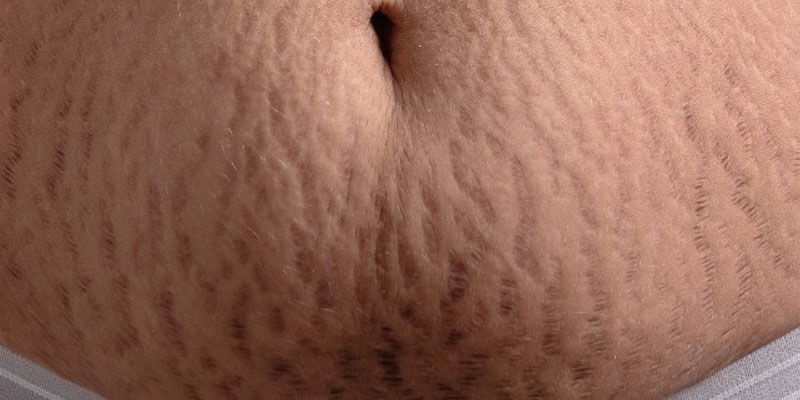
Stretch Mark Treatments That Actually Work
Stretch Mark Treatments That Actually Work Stretch marks, medically known as striae distensae, are extremely common. They can appear when the skin stretches or shrinks rapidly, causing changes in the collagen and elastin that support the skin. Pregnancy, puberty, rapid weight gain or loss, muscle growth, and hormonal changes are some of the most common situations associated with stretch marks. They may initially appear red, pink, purple, reddish-brown, or dark brown and often become lighter and less noticeable over time. While stretch marks are harmless, many people look for ways to reduce their appearance. The important thing to understand is that stretch marks are a type of scar, so no treatment can reliably erase them completely. However, several treatments can make them significantly less noticeable. Can Stretch Marks Really Be Treated? Yes, but the goal should be improvement rather than complete removal. The effectiveness of treatment depends on factors such as how old the stretch marks are, their color and texture, your skin type, and the area being treated. Recent research suggests that there is no single treatment that works best for everyone. Combination treatments may provide better results in some patients, particularly for older, white stretch marks. 1. Microneedling Microneedling is one of the commonly used treatments for stretch marks. It uses very fine needles to create controlled microscopic injuries in the skin. This stimulates the body’s natural healing response and encourages new collagen production. Over a series of treatments, microneedling can improve the texture and appearance of stretch marks. It is also considered a useful option for people with darker skin because it generally has a lower risk of unwanted pigmentation changes than some laser treatments. Results develop gradually because the skin needs time to produce new collagen. Several sessions may be required depending on the severity of the stretch marks. 2. Radiofrequency Microneedling Radiofrequency microneedling combines tiny needles with controlled radiofrequency energy. The needles create micro-injuries while the radiofrequency energy delivers heat into deeper layers of the skin. This combination can stimulate collagen remodeling and improve skin texture. Recent reviews have found fractional radiofrequency microneedling to be a promising option across different skin types. Your dermatologist or aesthetic physician can determine whether conventional microneedling or radiofrequency microneedling is more appropriate for your skin and stretch marks. 3. Laser Treatments Laser therapy can improve the appearance of stretch marks by stimulating collagen remodeling and addressing changes in skin color and texture. Different lasers may be selected depending on whether the stretch marks are newer and reddish or older and lighter. Fractional ablative and non-ablative lasers have both shown potential benefits, although treatment response varies between individuals. Laser treatment usually requires multiple sessions, and the choice of laser is particularly important for people with darker skin because some lasers can increase the risk of pigmentation changes. 4. Prescription Tretinoin Tretinoin is a prescription retinoid derived from vitamin A. It may help improve early stretch marks, particularly those that are still relatively new. Research suggests that tretinoin can encourage collagen remodeling and make early stretch marks less noticeable. However, it is considerably less useful for mature stretch marks. Tretinoin can cause irritation, dryness, redness, and increased sensitivity to sunlight. It should not be used during pregnancy, and anyone who is pregnant or breastfeeding should discuss treatment options with their doctor before using retinoid products. 5. Chemical Peels and Other Skin Treatments Chemical peels and other procedures such as microdermabrasion have also been used to improve the appearance of stretch marks. They work by encouraging skin renewal and improving surface texture. However, results can vary considerably, and these treatments may work better when incorporated into a personalized treatment plan rather than used alone. 6. Combination Treatments Sometimes, treating stretch marks with a combination of procedures may provide better improvement than relying on one treatment alone. For example, a dermatologist may consider combinations involving microneedling, radiofrequency, laser treatment, or platelet-rich plasma (PRP), depending on the patient’s skin type and the characteristics of the stretch marks. Recent reviews suggest that combination approaches are particularly promising for some difficult-to-treat mature stretch marks, although more high-quality research is still needed. What About Stretch Mark Creams and Oils? This is where many people spend money without seeing significant results. Products containing cocoa butter, vitamin E, olive oil, almond oil and similar ingredients are widely marketed for stretch marks. However, strong evidence that these products can remove or significantly reduce established stretch marks is lacking. The American Academy of Dermatology notes that popular home remedies such as cocoa butter, olive oil, almond oil and vitamin E have not been shown to reliably fade stretch marks. Some topical ingredients, particularly when used on early stretch marks, may offer modest improvement. However, creams generally cannot produce the same level of collagen remodeling as professional procedures. New Stretch Marks vs. Old Stretch Marks The age of your stretch marks matters. New stretch marks may appear red, pink, purple, or darker than your surrounding skin. These can sometimes respond better to topical treatments and certain procedures. Older stretch marks often become white or silvery and may have a slightly depressed texture. These mature marks can be more challenging to treat and may require procedures such as microneedling, radiofrequency or laser therapy to achieve noticeable improvement. Can Stretch Marks Be Completely Removed? Unfortunately, there is no guaranteed treatment that completely removes stretch marks. The realistic goal is to make them less visible by improving their color, texture, depth and overall appearance. Some people experience substantial improvement, while others may see more modest results. A dermatologist or qualified aesthetic physician can assess your stretch marks and recommend a treatment plan based on their age, appearance and your skin type. Final Thoughts Stretch marks are a normal part of how skin responds to rapid stretching, and having them does not mean that anything is wrong with your body. If they bother you, effective treatment options are available. Among the treatments currently used, microneedling, radiofrequency microneedling, laser procedures and selected prescription treatments such as